One record.
From first contact to payment.
On CargoPay a shipment is not a folder you file things into. It is the record the transport document, the dock appointment and the payment are all generated from, which is why the same load never has to be typed a second time.
In short
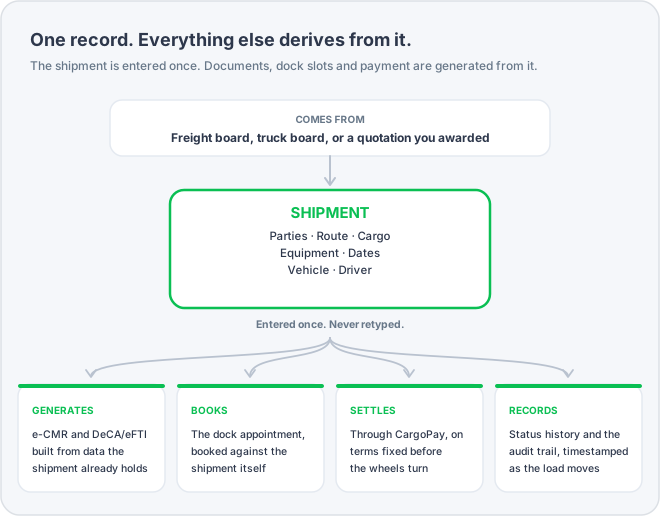
Every load on CargoPay has one shipment record. You create it once, and posting it to the freight board or opening it for bids publishes that same record. From there the eCMR, the DeCA or eFTI document, the dock appointment and the payment request all read from it, and the status history writes back to it. Nothing is copied between systems, because there is only one system.
What a shipment holds
The shipment carries everything the load needs, entered once at the point it is agreed.
The parties
The shipper and the carrier, both already verified, plus the consignee and the pickup and delivery contacts.
The route
Origin, destination and the dates the load is collected and delivered, with the addresses the documents and the dock booking both read from.
The cargo
Goods, weights, packaging and any dangerous goods flags, in the form the transport document needs them.
The equipment
The vehicle assigned to the load and the driver taking it, so the paperwork and the gate both know who is arriving.
The terms
The agreed rate and who is paying, fixed on the record before the load moves rather than paid by email afterwards.
The history
Every status change, timestamped, so what happened to the load is a record rather than a matter of whose notebook you believe.
The lifecycle
A shipment moves through six states, and every other part of the platform reads that clock. The dock board knows a load is dispatched. The payment knows it was delivered. Nobody has to be told twice.
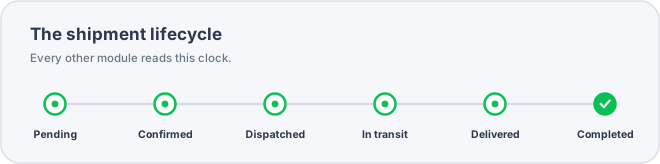
Some states are deliberately one way. Once a load is in transit the commercial terms are paid, so the record stops being editable and starts being evidence.
What it connects to
This is the part that makes CargoPay different from a load board with a payment button bolted on. The shipment is not one feature among several. It is the thing the others are made of.
It goes to the market
The shipment exists first. Posting it to the freight board, or opening it for bids, publishes the record you already hold, so the listing carriers answer and the load you agreed are the same thing. There is no step where somebody retypes an agreed load into a separate system.
It generates the documents
The eCMR and the DeCA and eFTI documents are built from data the shipment already holds. Compliance costs no extra work, and the document cannot contradict the order, because there is one source.
It books the dock
DockPass books the appointment against the shipment itself, so the carrier, the reference and the direction are already known. Your driver arrives to a named slot instead of a queue.
It pays
CargoPay raises the payment against the shipment, on terms fixed before dispatch. Because the platform knows the load actually moved, payment is tied to something it can see rather than to somebody's word.
It shows where the truck is
TruckTrace turns the shipment into one time-boxed link you send your customer. They watch the truck on a map with no account, no app and no password, and the positions come from the log the driver already files. The driver's name and speed are never shown.
What it means day to day
If you send freight
- The carrier you awarded is already verified, so there is nothing to vet again.
- The transport document exists the moment the load does, and matches the order by construction.
- You can see where every load is without phoning anybody.
- What was agreed is on the record, so a dispute is a lookup rather than an argument.
If you move freight
- You know who is paying and on what terms before you turn a wheel.
- Your driver carries the document on a phone instead of chasing signatures on paper.
- The dock slot is booked against the load, so the day is planned before you set off.
- Delivering well builds a record that follows you into the next negotiation.
Stop typing the same load twice
Join the verified network and run your freight from one record, from the moment it is agreed to the moment it is paid.
Or see what verification means before a company reaches the network.