Authorization payment
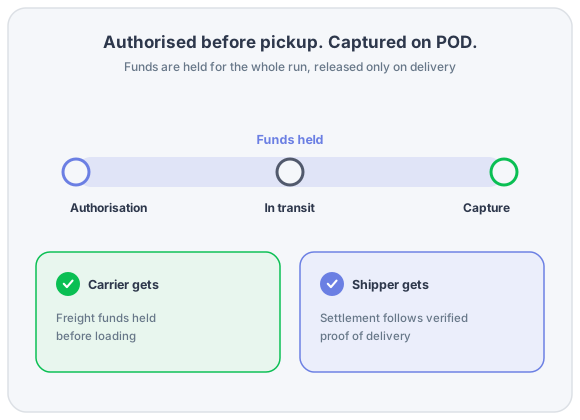
Freight funds authorised and held at dispatch, captured only upon proof of delivery. The carrier can see the money is held before loading, and the shipper pays only against a delivery that actually happened.
Use this workflowThe optimal balance for established lane partnerships
Authorization Payment resolves the structural tension between carrier cash flow requirements and the shipper holding on to their cash across European B2B freight lanes.
Shippers seek extended terms to manage their own liquidity. Carriers need faster payment to sustain fleet utilisation and driver retention. Authorization Payment delivers a mechanism that satisfies both imperatives no full prepayment required from either party, yet both sides operate with financial certainty.
Carrier gets
Freight funds held before loading, captured on the signed CMR rather than 45 days later.
Shipper gets
Payment follows a confirmed POD. No capital deployed before service completion.
When to deploy authorization payment
Select this workflow when lane trust exists but financial protection remains non-negotiable.
Established lane partnerships
You have shipped with them before, but financial risk cannot be eliminated. Trust is proven; exposure is managed.
Moderate lane rates
The freight rate doesn't justify full prepayment, but the funds still need to be held before the carrier commits fleet capacity.
Balanced commercial terms
Both parties seek equitable lane economics. The carrier is protected; the shipper deploys no capital before verified delivery.
High-Frequency lane operations
Recurring partner with consistent weekly volumes. The authorisation workflow cuts the back-and-forth over payment while keeping the financial controls that protect both sides.
How authorization payment executes
A documented, enforceable chain of events that protects carrier and shipper alike.
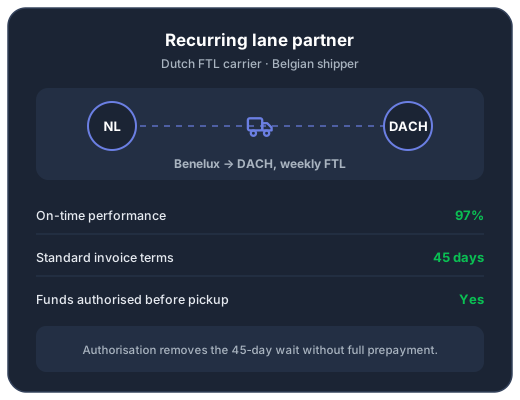
Recurring lane partner,
High-Frequency FTL operations
A Dutch FTL carrier has serviced a Belgian shipper's Benelux–DACH lanes for several months. Weekly volumes are consistent and on-time performance exceeds 97%. However, the shipper's standard terms are 45 days from invoice, creating persistent working capital pressure that constrains the carrier's ability to scale fleet capacity.
The carrier migrates to Authorization Payment through CargoPay. For each consignment, the shipper authorises the full lane rate before pickup, the funds are held, and the carrier captures upon POD submission.
Carrier: sees the money held against the shipment before accepting it, and is paid on the signed CMR rather than 45 days after invoicing.
Shipper: Preserves working capital. Pays only on verified POD performance.
The European freight context
While SEPA enables cross-border transfers to pay as rapidly as domestic ones, the surrounding processes reconciliation, managing the other side’s details, and cash application across multi-entity shipper organisations remain manual and resource-intensive.
Authorisation payment through CargoPay automates that chain, so the same payment record covers every EU member state and EFTA corridor instead of a separate manual reconciliation per entity.
Money committed at booking, released on delivery
Register, clear verification, and hold the freight funds from booking until proof of delivery is on the shipment.